
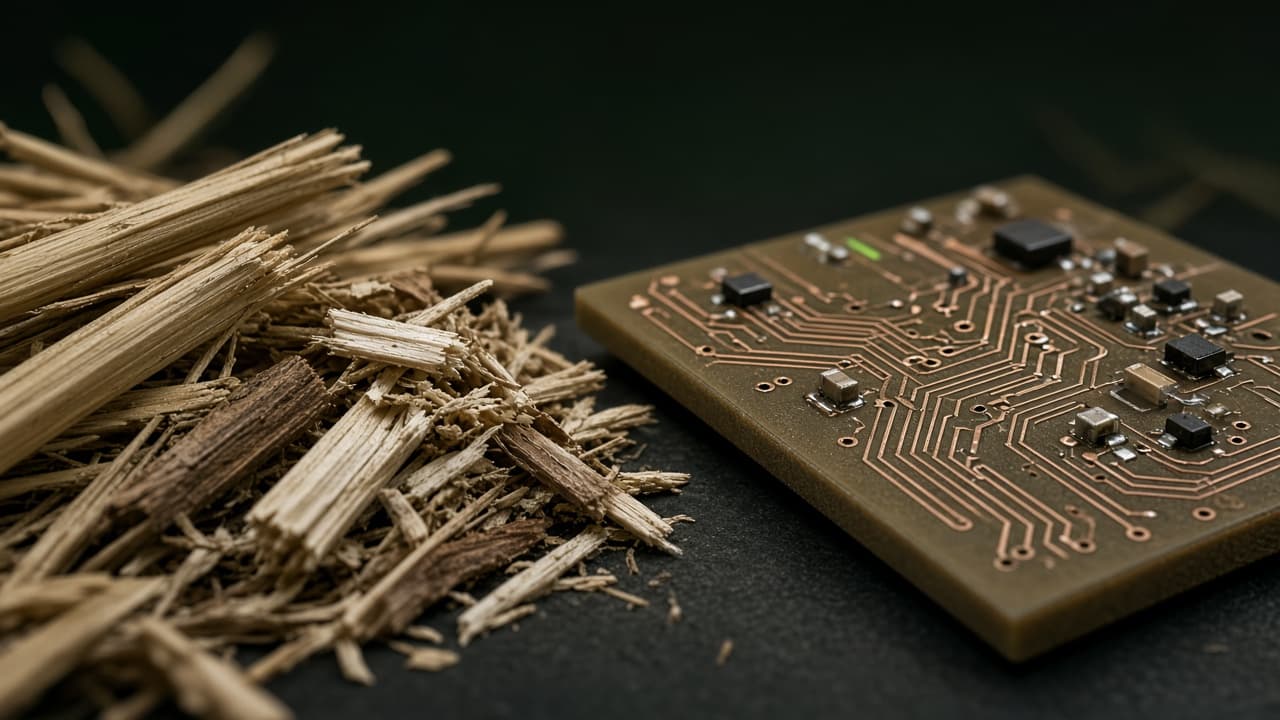

A next-generation FR-4 alternative.
A bio-based laminate made from crop residue. Designed to run on your existing FR-4 line, with no new capex or retraining.
- Halogen-free UL94 V-0
- Tg 262 °C
- Lighter than FR-4
Founded by IIT Madras and NUS alumni
For PCB fabricators
What we'll prove together in a side-by-side trial on your line.
Bisket panels and your FR-4, same design, same line. You keep the data.
- 01
Process compatibility
“Can I run this on my existing line?”
Bisket is designed to run on existing FR-4 lines, with no new capex or retraining as the goal. In the trial we check lamination, imaging and etching, drilling and routing, and tool wear against your FR-4 baseline.
- 02
Yield
“Will my yield drop?”
Same design, same line, same operators. We compare first-pass yield, scrap and rework directly with your FR-4 run, so you judge with your own numbers.
- 03
Cost
“What does it cost per board?”
We look at cost per finished board on your line: material, cycle time and any process adjustments, not just sheet price.
- 04
Supply
“Can you deliver when I need it?”
Our feedstock is Indian agricultural residue, processed with fabrication partners in Bengaluru and Chennai. We share sample availability and volume plans for your programme upfront.
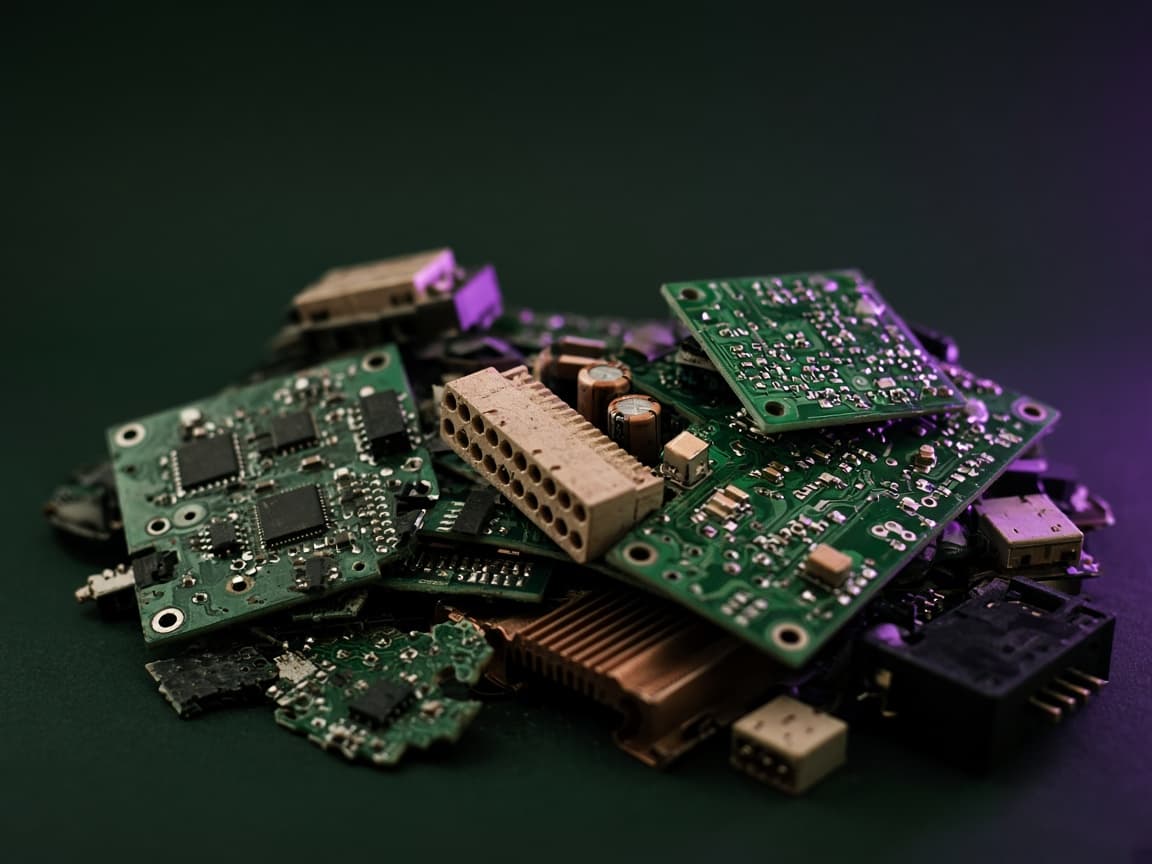
Impact
Most circuit boards end up as e-waste with nowhere good to go.
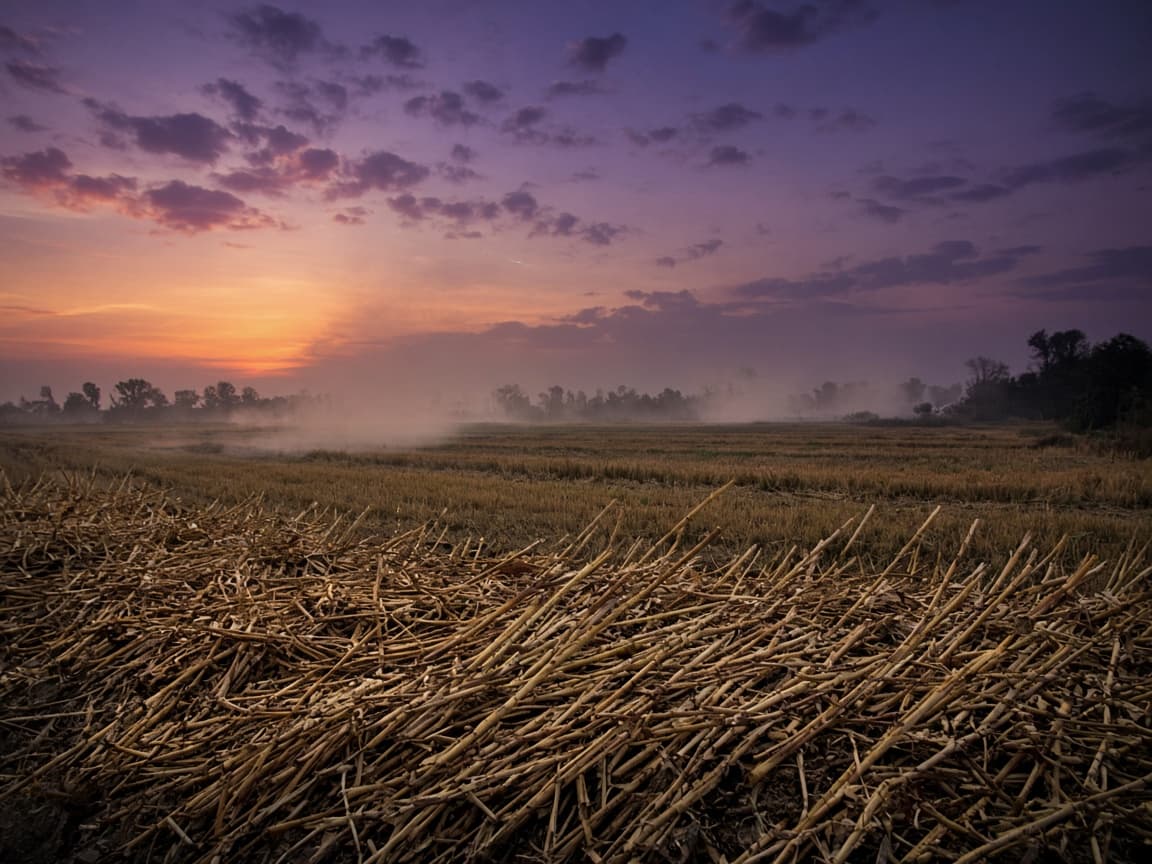
Impact
Meanwhile, crop residue is still burned in the field.
Also better for the planet
One material that takes on both problems.
Bisket turns an agricultural waste stream into the base of the circuit board, then designs that board for a better ending.
- 01
Crop residue, put to work
Our resin system has been formulated and tested with rice straw, sugarcane bagasse, bamboo and napier grass: agricultural residues that are often burned or left to rot.
- 02
No glass fibre
The laminate needs no woven fibreglass or fossil epoxy, which reduces reliance on imported glass fabric and petrochemical resins.
- 03
Halogen-free, UL94 V-0
Top-tier flame retardancy without the brominated flame retardants used in conventional FR-4.
- 04
Controlled end-of-life
Boards are designed with a planned end-of-life route from day one, instead of becoming e-waste that lingers in landfill.
- 05
Ready for ecodesign rules
The EU's Ecodesign for Sustainable Products Regulation (ESPR) is raising the bar on materials and circularity. A bio-based, halogen-free laminate helps OEMs get ahead of it.
- 06
Made in India
Made from Indian agricultural feedstock and processed with PCB fabrication partners in Bengaluru and Chennai, building a domestic supply chain for PCB laminates.
The shift
We turn crop residue into a PCB laminate built for end-of-life.
Conventional FR-4 is fossil epoxy on woven glass fibre, and it has no good way back. Bisket replaces both with a lignocellulosic bio-resin from agricultural residue, so the board is designed for a controlled end-of-life from the start.
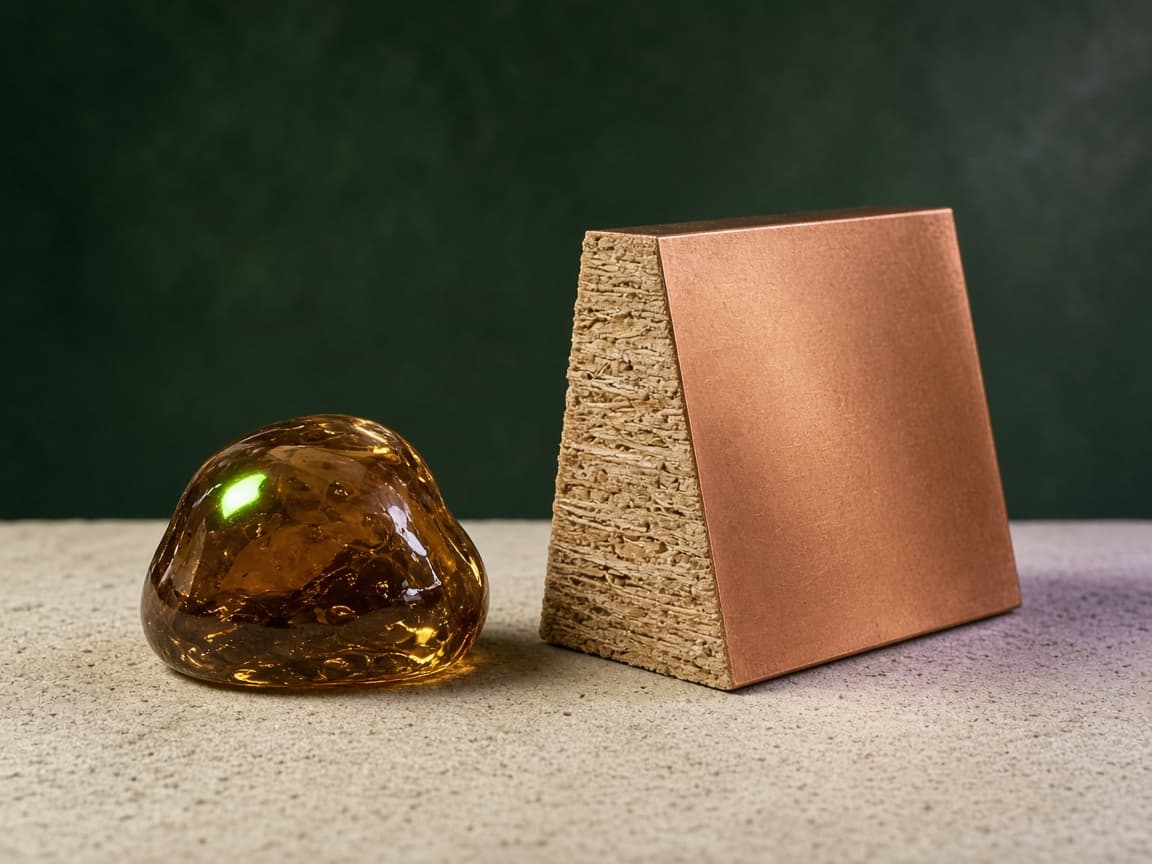
Bisket
Bio-based · halogen-free · glass-freeCrop residue
Rice straw, bagasse, bamboo, napier grass
Bisket laminate
Lignocellulosic bio-resin, no glass fibre
Working PCB
Fabricated with PCB partners
Controlled end-of-life
A planned route back to nature
Circular: residue in, back to nature out.
Conventional FR-4
Fossil-based · glass-reinforcedFossil resin + glass fibre
Petrochemical epoxy, woven fibreglass
FR-4 laminate
Often brominated flame retardants
PCB
Hard to separate at end of life
Landfill / e-waste
No good way back
Linear: take, make, discard.
Measured performance
Bio-based, and tougher, lighter and more arc-resistant than FR-4.
- Glass transition temperature (Tg)
- 262°C
High thermal headroom for soldering and operation
- UL94 flame rating
- V-0
Achieved halogen-free
- Arc resistance
- Up to 325s
vs 120–180 s typical for FR-4 · tested at CIPET Chennai, Aug 2026
- Unnotched Izod impact strength
- 129–152kJ/m²
vs 3.7–8 kJ/m² typical for FR-4
- Density
- 1.1–1.28g/cm³
Lighter than FR-4 (~1.9 g/cm³)
- Volume resistivity
- Up to 2.4 × 10¹³Ω·cm
Strong electrical insulation
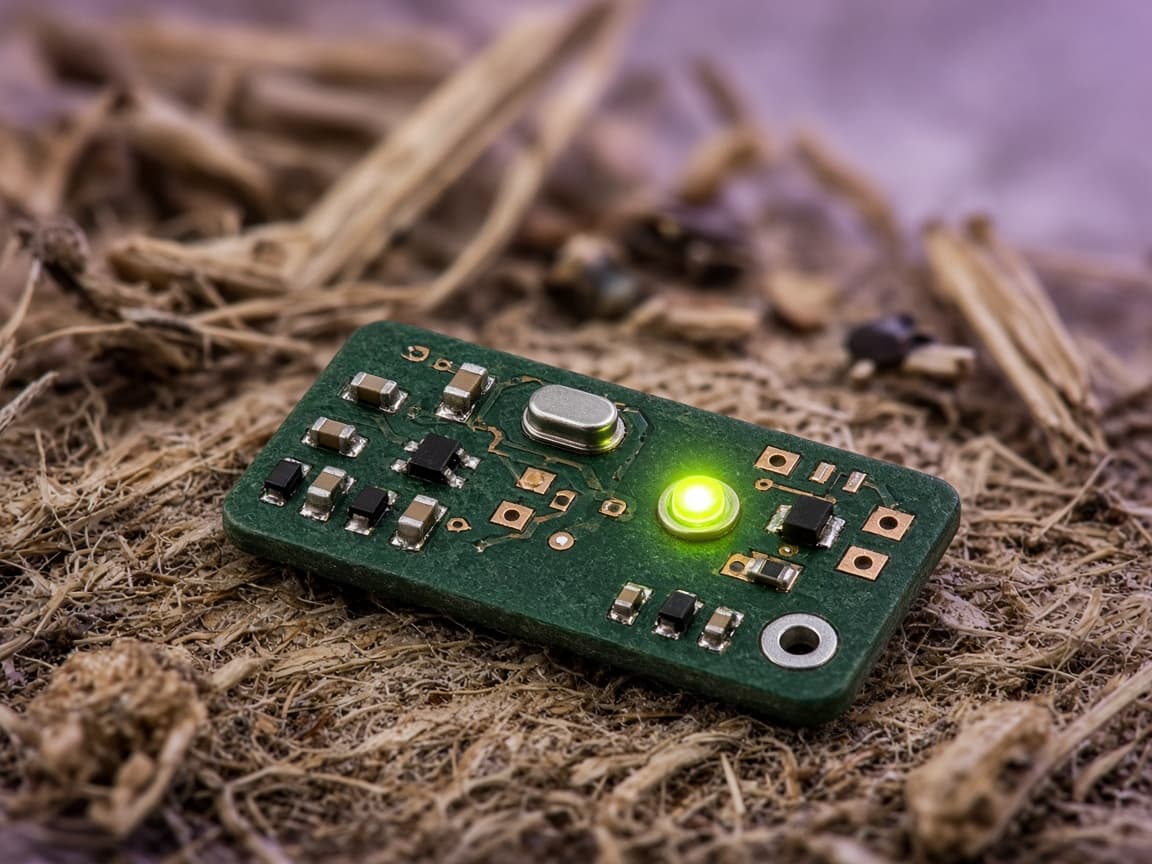
In the real world
From lab resin to working boards.
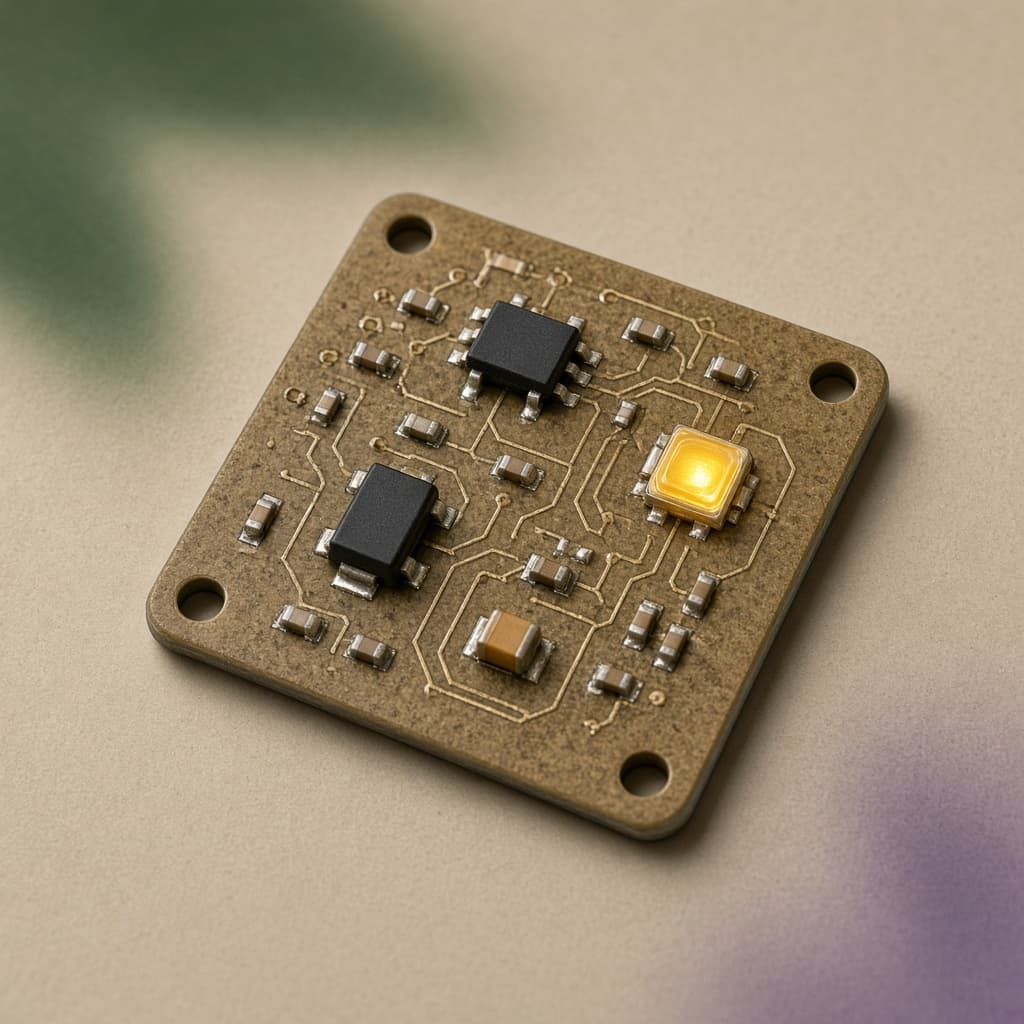
Available now: single-layer boards for low-power electronics such as LED lighting, IoT devices and wearables. Multilayer in development. Processed with PCB fabrication partners in Bengaluru and Chennai.
Qualification roadmap
Certifications: where we are, and what's next.
We publish status plainly. Items marked in progress or planned are not yet certified.
Achieved
UL94 V-0
Flame rating, achieved halogen-free
In progress / planned
IPC-4101
Base material specification
IPC-6012
Rigid board qualification and performance
IPC-A-600
Printed board acceptability
RoHS / REACH
Regulatory compliance for export markets
Thermal cycling (IPC-TM-650)
Long-term thermal reliability
CAF resistance
Conductive anodic filament reliability
Solder float, 260 °C
Solder heat exposure
LCA / carbon footprint
Life-cycle assessment
Recognised by
Made in IndiaFounded by IIT Madras and NUS alumni
Based in
Bengaluru · Chennai
PCB fabricators and OEMs: let's run a side-by-side trial on your line. Whitepapers and test results are available on request.